Korean poetry · 윤동주
“죽는 날까지 하늘을 우러러 한 점 부끄럼이 없기를”
The most iconic line in Korean modern poetry — a quiet promise to live without shame.
The most iconic line in Korean modern poetry — a quiet promise to live without shame.
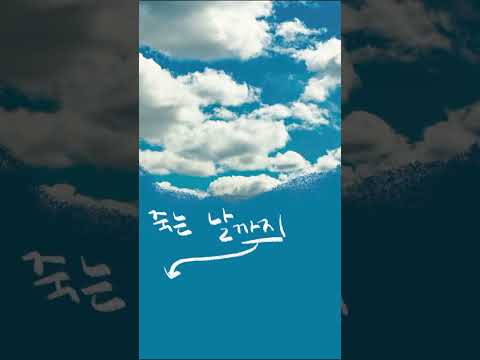
Video lesson
A short focused on the opening line of 서시 — “죽는 날까지 하늘을 우러러 한 점 부끄럼이 없기를” — and what it means in natural Korean.
죽는 날까지 하늘을 우러러 한 점 부끄럼이 없기를
Romanization: jukneun nal-kkaji haneureul ureoreo han jeom bukkeureomi eopgireul
👉 Natural English:
“Until the day I die, may I have no shame as I look up at the sky.”
You can also translate the second half more emotionally as:
“May I live my whole life without feeling even a speck of shame when I face the sky.”
윤동주 opens *서시* with a vow. He wants to live so purely that, even on the day he dies, he could lift his head toward the sky without a single stain of guilt. The line is humble, aspirational, and morally rigorous — not boastful.
Korean poets often use ‘sky’ (하늘) as a symbol of conscience, purity, or a higher moral standard. In 윤동주’s time (under colonial rule), it also implies the gaze of something beyond human power.
그는 하늘을 우러러 맹세했다.
He looked up at the sky and made a vow.
우러러 본 하늘이 너무 맑았다.
The sky I looked up at was so clear.
Key idea
한 점 = a tiny speck 부끄럼 = shame, moral embarrassment
The phrase isn’t about embarrassment in the social sense. It’s moral shame — guilt, compromise, the feeling of having betrayed your conscience.
한 점의 부끄럼도 없이 살고 싶다.
I want to live without even a particle of shame.
윤동주 wrote *서시* under Japanese colonial rule, in his early 20s. The vow gains weight because he lived and died under oppression. His poetry insists on integrity not as naive purity, but as resistance.
Note: This line is often memorized by Korean students. It represents the core of 윤동주’s poetic identity.
Today, people quote this line when they talk about conscience, public responsibility, or wanting to live cleanly in a corrupt world.
죽는 날까지 하늘을 우러러 한 점 부끄럼이 없기를, 라고 윤동주는 썼어요.
“Until the day I die, may I have no shame as I look up at the sky,” Yun Dong-ju wrote.
한 점 부끄럼 없이 살고 싶다는 마음이 느껴져요.
You can feel his desire to live with a completely clear conscience.
What does ‘하늘’ most strongly symbolize in 윤동주’s first line?
True or false: ‘부끄럼’ here means social embarrassment.
Which translation best captures the feeling of the line?
K-Lines members see the full breakdown here.
Unlock extra examples, tone notes, and quizzes for this line and other lessons.
K-Lines members see the full breakdown here.
Unlock extra examples, tone notes, and quizzes for this line and other lessons.
Unlock extra examples, tone notes, and full quizzes for “죽는 날까지 하늘을 우러러 한 점 부끄럼이 없기를” and other lessons.
Continue learning with more Korean phrases from K-dramas, K-pop, and daily life.